

The Fibres

Truth and Transparency
Unspooling the Sources
True provenance is a rarity in our modern times. But Pam was on a mission to craft blankets that are truly transparent in sourcing. And so she did.
Following the threads
Wools and Cotton
Pam uses wool and cotton in her blankets.
Here, the sources of the fibres used to craft a Macgee Cloth blanket.

Origin: Yorkshire, United Kingdom
UK Lambswool
The superfine English Lambswool used in Macgee blankets is produced and spun in the United Kingdom at Gledhill Spinners in England. The Gledhill family has operated the facility for over seventy years, and before the acquisition of the Pingle Mill in 1936, the Pingle Mill had been spinning wool and weaving since 1777.
Gledhill wool is processed under the labour and environmental impact regulations of the European Union.
Lambswool blankets are soft and dense, with a smooth handle.

Origin: Yorkshire, United Kingdom
Shetland Wool
Shetland wool is a sturdy wool with a textured feel.
Our Shetland wool is produced and spun by Gledhill Spinners, the same as our Lambswool, listed above.
Gledhill wool is processed under the labour and environmental impact regulations of the European Union.
Shetland wool blankets are resilient and fibrous with a crisp handle.

Origin: New Brunswick, Canada
Canadian Wool
The Canadian wool Pam usees is entirely Canadian. Sourced locally from Canadian farms and spun and dyed by Briggs and Little, Canada's oldest woollen mill located in New Brunswick in operation since 1857.
Briggs and Little works directly with Canadian farmers and with the Canadian Cooperative Wool Growers, to ensure that every fleece is 100% Canadian and graded to the highest standards. Every bale of wool is carefully selected to meet strict quality requirements.
Canadian wool blankets are dense and fluffy, with a bouncy handle.

Origin: Geelong, Australia
Geelong Merino
Occasionally, Pam weaves a small collection of Geelong blankets. Super Fine Geelong Lambswool is a luxurious, soft, and lightweight fibre derived from the first seven month old shearing of Merino sheep, traditionally from Geelong, Australia. Known as one of the softest lambswools, it features ultra-fine, 17–19 micron fibres that offer warmth and comfort. This premium fine wool comes rivals the finest cashmere for softness.
Sourced from Z. Hinchliffe & Sons in Huddersfield, England, Geelong is generally spun for knitting, but the shuttle loom is gentler than rapier loom and can weave the fine threads without damage.
Geelong blankets are a premium blanket with a light and creamy, luxurious handle.

Origin: Texas, USA
Organic Cotton
The cotton is Texas-certified 100% organic from Payne Farms in Texas, and ring spun at Hill Spinners in Thomasville, North Carolina.
Grown and marketed by the Texas Organic Cotton Marketing Cooperative and certified by the Texas Department of Agriculture, the cotton is grown organically, and most co-op members practice dryland farming techniques, relying on natural weather cycles rather than large amounts of irrigation water to grow their cotton.
The cotton blankets have a comforting weight, a smooth feel and a cool, drapey handle.
A Mission Not-So Impossible
Weaving Sustainability
One of Pam's motivations in creating a bespoke textile mill was to find suppliers of ecologically grown and processed fibres. Textile production today is the second most environmentally degrading industry in the world, due to a lack of regulatory oversight worldwide. On many textile websites you'll find the word ‘sustainability’ used but not defined beyond that. A Macgee Cloth blanket is a sustainable choice.

A macro look at a wool Macgee cloth blanket and cut fringe
Continue Reading
There's More to Learn
Her Story
A trip to Spain prompted a mission in doing the impossible: tracking down machines from a century ago and restoring them to their former glory.
Read the Adventure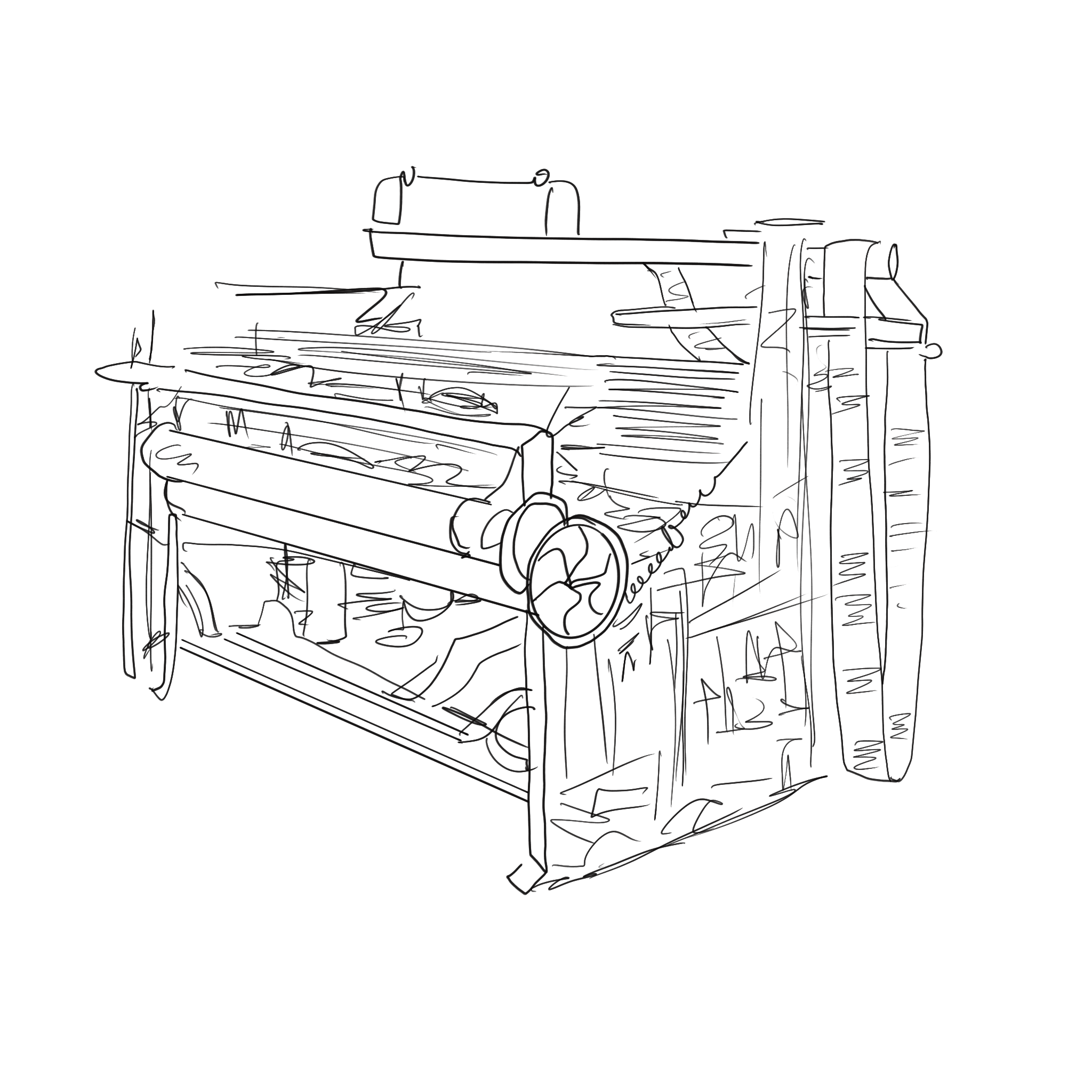
The Machinery
Discarded looms found in a shed in the fields of Yorksire, a warper from the 1800s, these are the machines of a bygone era, hulking dinosaurs that hum again.
Understand the Process
Make a Blanket
There's a lot more to crafting a Macgee blanket than weaving alone. From fabric and colour selection to warping and weaving to finishing each piece by hand.
Follow Step by Step
A close-up view of the selvedge edge of a wool blanket crafted in 2024